ROHIT: Restoration of Health in Totality
Phone:+91-8191-00-2535|WhatsApp:+91-8191-00-2535
ROHIT Monogram Logo
ROHITRestoration of Health in TotalityBy Dr. Rohit, BHMS
New Publication Platform•ROHIT: Restoration of Health in Totality•By Dr. Rohit, BHMS (Phone: +91-8191-00-2535, Roorkee, District-Haridwar, Uttarakhand, India)
Authoritative Clinical Treatise

ROHIT: Restoration of Health in Totality

By Dr. Rohit, BHMS

A structured exploration of restoring health by understanding the complete patient rather than viewing disease only through an isolated diagnosis. Grounded in clinical observation, case taking, individualisation, and holistic synthesis.

6
Parts
34
Chapters
5 Stages
ROHIT Framework
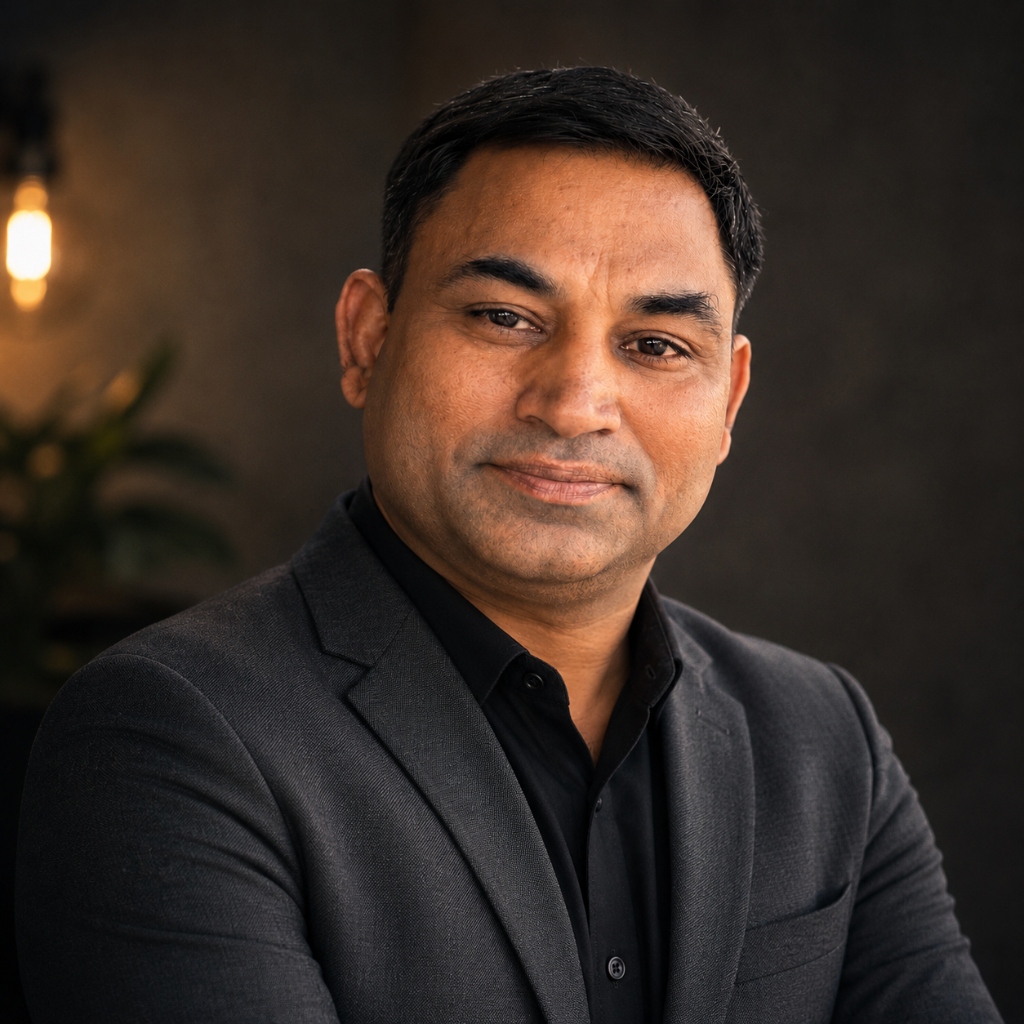
Dr. Rohit, Author of ROHIT: Restoration of Health in Totality
RH
Author & Clinician

Dr. Rohit

BHMS | Phone & WhatsApp: +91-8191-00-2535 | Roorkee, District-Haridwar, Uttarakhand, India

PublicationRestoration of Health in Totality
Author Signature
Authoritative treatise exploring individualisation and health in totality.
The Central Editorial Philosophy

What Does Restoration of Health in Totality Mean?

The word ROHIT stands for Restoration of Health in Totality. The foundational editorial philosophy is that understanding health requires attention to the individual as a whole. Disease rarely manifests as an isolated mechanical failure of a single organ; rather, it is a disturbance of the organism's dynamic vital equilibrium.

When clinical practice treats only the isolated diagnostic label through suppression, the underlying susceptibility remains unchanged. True restoration demands perceiving the patient beyond diagnostic classification: evaluating mental and emotional characteristics, physical generals, individual modalities, causation, and constitutional terrain.

Medical and philosophical study environment

“Diagnosis tells us what ten thousand patients have in common; individualisation reveals what is unique to the person before us.”

Foundational Thesis

The Patient Is More Than the Disease

When a diagnostic label is assigned, attention usually narrows to the pathological tag. Yet two human beings with the identical diagnostic label will experience pain thresholds, sleep patterns, emotional reactions, and climatic sensitivities that differ radically.

Healing begins when the physician listens to the living individual rather than prescribing mechanically for the medical record.

Symptoms are not simply errors to be silenced; they are adaptive expressions of the organism's vital effort to restore balance. By understanding this natural effort, clinical care cooperates with vitality instead of obstructing it.

Clinical Reasoning Framework

The Five Stages of the ROHIT Method

A structured, reproducible methodology guiding the physician from first recognition of the patient to long-term curative tracking.

R
Stage 1 of 5

Recognise: Context, Causation and Relevance

Recognise the patient, the presenting problem, the domestic and occupational context, aetiological triggers, and clinically relevant characteristics before categorizing complaints.

Clinical Objective

Map the human environment, historical departure from health (never well since), and family vulnerabilities within the initial five minutes.

Verification Checklist
  • Identify the precipitating life shock or exposure
  • Assess domestic, occupational, and environmental burdens
  • Note constitutional background and past medical trajectory
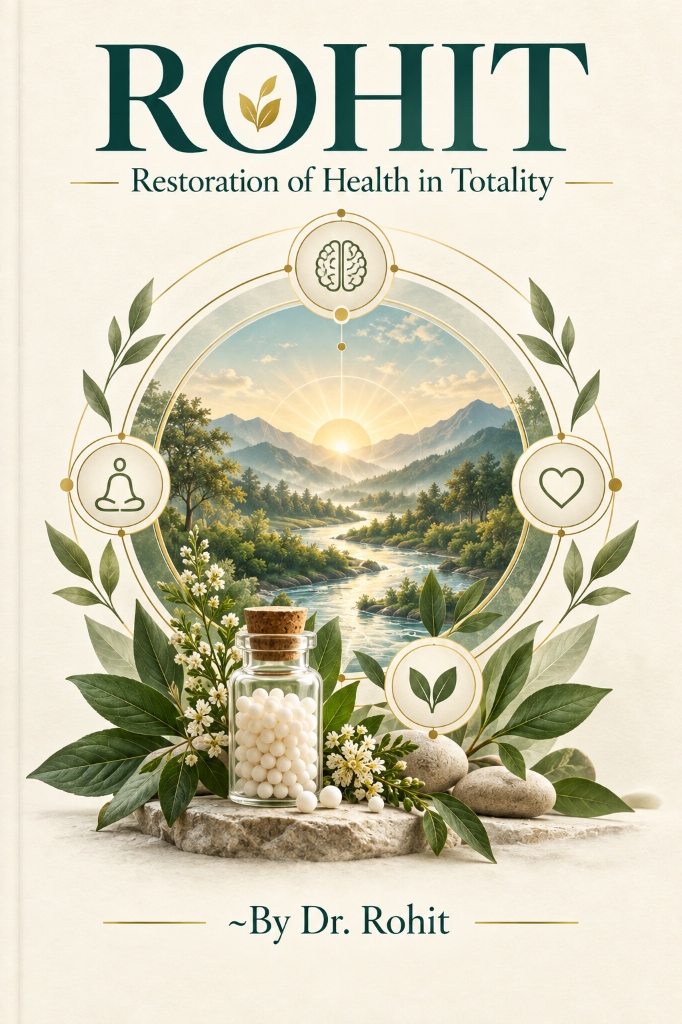
ROHIT: Restoration of Health in Totality Official Book Cover
The Master Treatise

ROHIT: Restoration of Health in Totality

Mind, Body, Emotions, Environment, in Totality

By Dr. Rohit, BHMS

The comprehensive clinical treatise establishing systematic homeopathic case evaluation, the five progressive stages of the ROHIT method, and constitutional restoration.

6Master Parts
34Chapters
5ROHIT Stages
BHMSClinical Basis
Complete Book Architecture

The Six Parts of the Book

A methodical progression from philosophical foundations to clinical mastery and physician ethics.

PART IPart 1

WHAT DOES IT MEAN TO RESTORE HEALTH?

Foundations of Human Totality and the Nature of Recovery

Explores the fundamental shift from viewing disease as an isolated pathology to understanding health as an integrated, dynamic balance across the human organism.

Sample Chapters:
Ch. 1: The Patient Is More Than the Disease
Ch. 2: Health, Disease and the Human Totality
Ch. 3: From Diagnosis to Individualisation
PART IIPart 2

UNDERSTANDING THE PATIENT

The Art of Listening, Case Taking and Phenomenological Investigation

Details the clinical discipline of perceiving the patient: mental states, physical generals, particular expressions, modalities, and constitutional susceptibility.

Sample Chapters:
Ch. 6: Listening Before Prescribing
Ch. 7: The Art of Case Taking
Ch. 8: Mental and Emotional Characteristics
PART IIIPart 3

THE ROHIT METHOD

A Structured Five-Stage Clinical Reasoning Framework

Introduces the five sequential clinical disciplines: Recognise, Observe, Holistic Integration, Individualise, Treat and Track.

Sample Chapters:
Ch. 14: Recognise
Ch. 15: Observe
Ch. 16: Holistic Integration
PART IVPart 4

FROM TOTALITY TO REMEDY

Symptom Evaluation, Repertory, Materia Medica and Posology

Translates the perceived totality into therapeutic action: grading symptoms, repertorial synthesis, Materia Medica study, potency selection, and second prescriptions.

Sample Chapters:
Ch. 20: Characteristic Versus Common Symptoms
Ch. 21: Hierarchy of Symptoms
Ch. 22: Repertorial Thinking
PART VPart 5

CLINICAL APPLICATION

Acute Dynamics, Chronic Obstacles and Real-World Practice

Applies the totality framework to acute versus chronic disease landscapes, addressing lifestyle obstacles, maintaining causes, and clinical pearls.

Sample Chapters:
Ch. 27: Acute Versus Chronic
Ch. 28: Maintaining Causes and Lifestyle
Ch. 29: Obstacles to Cure
PART VIPart 6

THE PHYSICIAN AND THE PATIENT

Ethics, Empathy, Physician Well-Being and the Future of Care

Examines the moral and internal dimension of clinical practice: physician responsibility, ethical boundaries, self-care, and integrative medicine horizons.

Sample Chapters:
Ch. 31: Ethics, Empathy and Responsibility
Ch. 32: The Physician's Own Health
Ch. 33: Continuous Learning
Selected Investigations

Featured Chapters

View All 34 Chapters in Explorer
PART I•Chapter 1•7 min read

The Patient Is More Than the Disease

Moving Beyond Diagnostic Labels into Human Reality

When a diagnosis is assigned, clinical attention often narrows to the pathological label. This chapter examines why the label, while useful for prognosis, is never identical to the patient experiencing it.

“Why does identical pathology manifest so differently across two human beings?”
PART I•Chapter 3•8 min read

From Diagnosis to Individualisation

Finding the Characteristic Features in Clinical Practice

Diagnosis tells us what is common to ten thousand cases of migraine or asthma; individualisation reveals what is unique to this patient sitting in front of us right now.

“How do we distinguish between what belongs to the disease and what belongs to the patient?”
PART I•Chapter 5•9 min read

What 'Totality' Actually Means

Deconstructing Common Fallacies of the Whole

Totality is often misunderstood as an exhaustive, undisciplined catalog of every ache and itch. This chapter restores the classical definition of totality as an organized, coherent portrait.

“How does a clinical totality differ from a random checklist of complaints?”
PART II•Chapter 6•8 min read

Listening Before Prescribing

The Therapeutic Silence and the Art of Uninterrupted Case Taking

The modern clinical encounter is often rushed, interrupted within sixteen seconds by physician inquiries. This chapter re-establishes the discipline of patient-led narrative.

“What crucial clinical clues are forfeited when a physician interrupts too early?”
Clinical Comprehension Matrix

Understanding the Patient

The patient is understood through an interrelated network of physiological, emotional, and aetiological characteristics.

Living botanical vitality and natural equilibrium
Dynamic Vital Ground

The Organism as a Living Equilibrium

Every physiological manifestation reflects the organism's adaptive capacity. Understanding the patient requires mapping emotional susceptibility, thermal generals, and characteristic modalities.

The Clinical Architecture of Totality

From Fragmented Symptoms to Restored Vitality

How the discipline of Restoration of Health in Totality synthesizes the multi-layered expressions of a human being into a single, individualised clinical direction.

Origin Point

The Complete Human Being

An undivided, dynamic living organism experiencing disturbance across biological, psychological, and environmental planes simultaneously.

Systemic Expressions
The Ten Clinical Dimensions

Gathered through uninterrupted listening, sensory observation, and non-leading inquiry

Mind and Emotions
Anxiety, grief, intellectual pace, fears
Physical Generals
Thermals, cravings, sleep orientation
Particular Symptoms
Local sensations, organ affinities
Modalities
Aggravations, ameliorations, circadian time
Aetiological Causation
Precipitating shocks, grief, exposures
Constitution
Physiological makeup, bodily habitus
Vital Susceptibility
Innate reactive capacity of organism
Predisposition
Latent hereditary tendencies
Lifestyle Factors
Nutrition, circadian rhythm, strain
Clinical Findings
Diagnostic lab assays, objective scans

Synthesis and Evaluation
Qualitative Mosaic

The Integrated Patient Picture (Totality)

The disparate fragments of data are organized into an interlocking hierarchy where the central thread connects the emotional state, thermal sensitivities, and physical pathology.

Characteristic Discrimination
Step A: Individualisation
Isolating the Characteristic

Common disease symptoms are separated from rare, peculiar, and striking modalities that belong strictly to this person.

Step B: Clinical Decision
Selecting the Similimum

The single indicated remedy is chosen with precise posology (potency, dose, repetition) matched to vital susceptibility.

Therapeutic Outcome
Curative Horizon

Restoration of Health in Totality

Follow-up systematically verifies recovery according to Hering's law: symptoms move from within outward, from more vital organs to less vital, and in reverse chronological order of appearance, awakening lasting autonomy and dynamic resilience.

Dr. Rohit, Author of Restoration of Health in Totality

Dr. Rohit

BHMS | Author and Physician | Phone & WhatsApp: +91-8191-00-2535 | Roorkee, District-Haridwar, Uttarakhand, India

Author Signature
Author Presence and Philosophy

About the Author

Dr. Rohit is BHMS from Sri Ganganagar Homeopathic Medical College Hospital And Research Institute, practicing as a clinician and author based in Roorkee, District-Haridwar, Uttarakhand, India (Phone & WhatsApp: +91-8191-00-2535). His work centers on restoring health through a disciplined understanding of the human totality, integrating classical homeopathic jurisprudence, precise case taking, and modern patient-centered clinical reasoning.

“Medicine becomes truly scientific only when it acknowledges the full humanity of the patient. To treat without understanding the person is to treat a phantom.”

In ROHIT: Restoration of Health in Totality, Dr. Rohit articulates a structured five-stage framework (Recognise, Observe, Holistic Integration, Individualise, Treat and Track), bridging the gap between theoretical philosophy and daily clinical reality.

Knowledge Base and Inquiries

Educational Articles

Browse All 19 Categories
The ROHIT Method: Five Stages from Recognition to Sustained Recovery
Clinical Reasoning
8 min read

The ROHIT Method: Five Stages from Recognition to Sustained Recovery

A Structured Clinical Framework for Modern Patient-Centered Care

An in-depth explanation of the five disciplines: Recognise, Observe, Holistic Integration, Individualise, and Treat and Track.

The Art of Active Clinical Observation: Listening Before Prescribing
Clinical Observation
7 min read

The Art of Active Clinical Observation: Listening Before Prescribing

How Non-Suggestive Presence and Silence Reveal the Patient's Hierarchy

Clinical observation begins the moment the patient enters the consultation room, observing posture, voice, and spontaneous narrative without interruption.

Why the Diagnostic Label Is Never the Complete Patient
The Patient as a Totality
6 min read

Why the Diagnostic Label Is Never the Complete Patient

Moving from Disease Classification to the Living Reality of Health

A medical diagnosis names the pathological category, but it cannot describe how this unique human organism responds, sleeps, fears, and heals.

Clarifying Fundamental Inquiries

Questions Around Totality

Thoughtful answers addressing common questions regarding individualisation, case taking, and homeopathic clinical reasoning.

How does the concept of totality differ from a long list of symptoms?

Totality is not a quantitative aggregation of every complaint. It is a qualitative, structured synthesis. A hundred isolated symptoms create confusion; a true totality identifies the guiding dynamic thread connecting the patient's mental reactivity, thermal generals, and characteristic modalities.

Why does modern diagnostic categorization fall short of individualised care?

Diagnostic classification groups patients by shared pathology (what is common to all patients with asthma or rheumatoid arthritis). Individualisation isolates what is unique and characteristic to this specific human being, providing the precise criteria needed to select the similimum.

What role do maintaining causes play in persistent illness?

A maintaining cause is an ongoing dietary, toxic, occupational, or psychological obstacle that blocks recovery. Hahnemann emphasized that no remedy can overcome persistent lifestyle abuse. Identifying and removing maintaining causes is the indispensable first duty of the clinician.

How does the ROHIT framework apply to acute versus chronic conditions?

In acute conditions, the five stages operate rapidly, focusing on immediate triggers, sudden modalities, and current physical generals. In chronic conditions, the stages involve deep longitudinal inquiry into constitutional terrain, lifelong susceptibility, and past traumatic aetiologies.

Engage with the Knowledge Platform

Discover the Architecture of Health in Totality

Explore the 34 chapters, study the five stages of the ROHIT method, browse the clinical glossary, or read educational essays published by Dr. Rohit, BHMS.